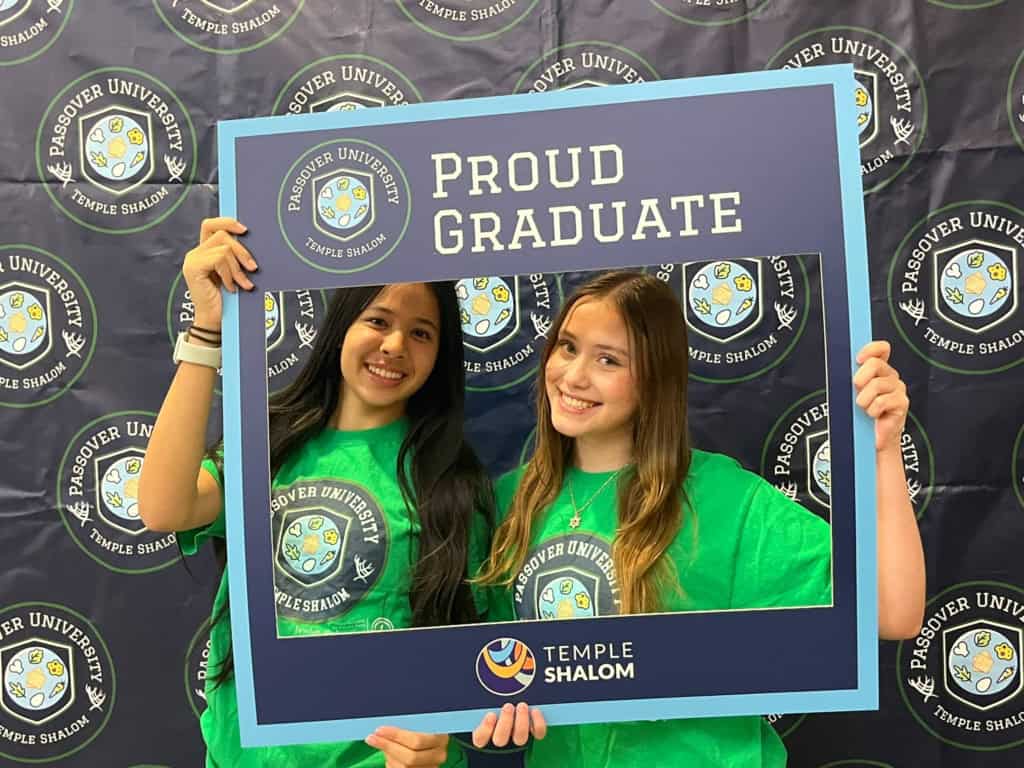
This spring, Temple Shalom celebrates the fifth year of Passover U, a tradition of learning that continues to grow and deepen with each passing year.
Held on a Sunday morning each spring, Passover U brings our community together to prepare for the Seder through hands-on learning, creativity, music, food, and conversation. Religious school families are encouraged to attend and learn side by side, and the program is open to all Temple Shalom members and the greater Dallas Jewish community. From the start, our purpose has been clear: to enrich and elevate the Seder experience for everyone who participates.
Our inspiration comes directly from the Haggadah:
“Haray zeh mishubach”: whoever expands and enriches the telling of the Exodus story is to be praised.
Passover U lives out that teaching. Each year we ask ourselves: How can we add more meaning, beauty, confidence, and depth to the Seder tables in our community?
With the help of an initial Federation grant five years ago, this joyful experiment took root. Since then, it has become a signature Temple Shalom experience. Our Lifelong Learning Council thoughtfully designs nearly 20 sessions each year, offering something for every age and interest: from text study and discussion to art, music, cooking, tasting, and hands-on projects.
In recent years, Passover U has also reflected the annual High Holiday theme introduced by Rabbi Paley. This year’s theme, Through a New Door: Welcoming What Comes Next, connects powerfully to Passover itself: a holiday about transition, courage, and stepping into the unknown.
Over five years, Passover U has grown in participation and imagination. Yet its heart remains the same: bringing generations together to explore ancient ideas in fresh, meaningful ways.
Each year we continue asking: How do we open new doors? How do we make the story come alive for today? How do we help families feel more prepared and inspired as they gather around their Seder tables?
That spirit of curiosity and renewal is what keeps Passover U evolving, and what makes it a cherished part of our Temple Shalom tradition.