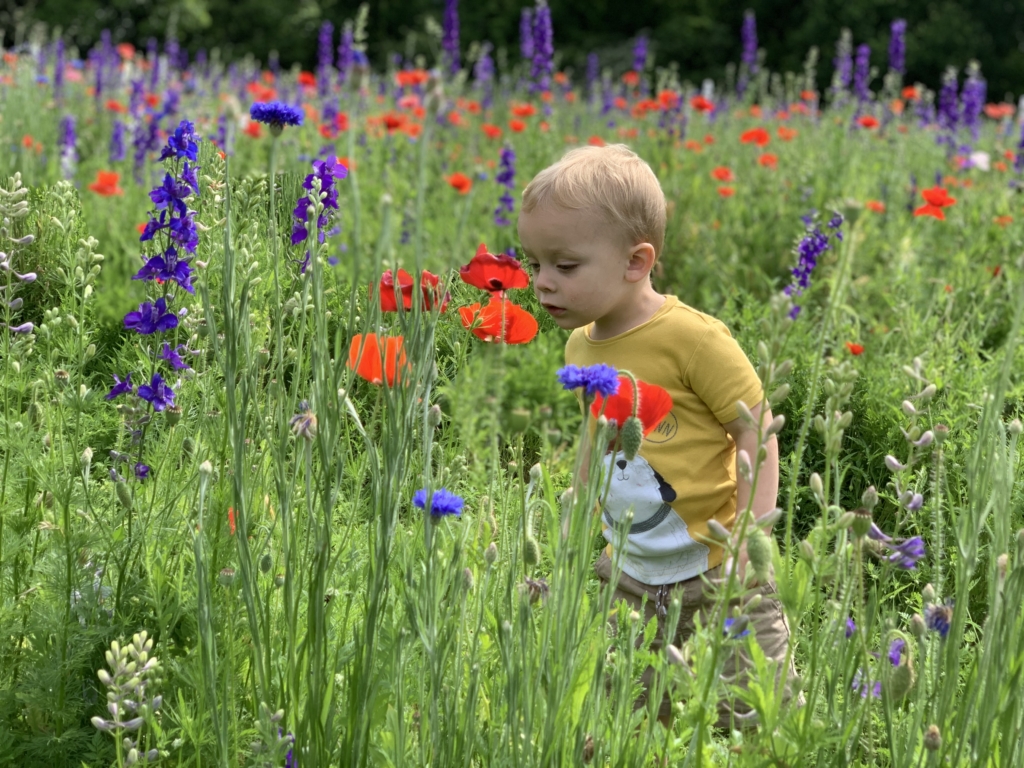
If you’ve been exploring preschool options, you may have come across the term nature-based education and wondered what makes it different from a traditional program. In fact, it’s an approach we’re committing to as part of our new Temple Shalom Early Childhood Center.
At its heart, nature-based education simply means that the natural world becomes an essential part of how children learn. Instead of treating the outdoors as a short recess break or an item to check off a to-do list, nature becomes a classroom, laboratory, playground, and space for deep, meaningful learning.
Below are some of the ways this nature-based approach supports children’s development and sets the foundation for lifelong learning.
Learning Happens Through Real Experiences
Young children learn best when they can touch, move, experiment, and explore. In our program, this may look like digging in soil and discovering worms and insects. It may look like planting, caring for, and watching plants grow in the garden. When collecting leaves and other fallen treasures, children have the opportunity to notice patterns and colors. Experiencing the natural world throughout the year allows children to observe seasonal changes in real time.
These experiences naturally spark questions like:
Why do leaves change color?
Where did the worm go?
How tall will our plant grow?
Those questions lead to scientific thinking, curiosity, and investigation – the foundation of creativity and lifelong learning.
Healthy Risk and Physical Development
Natural environments invite children to test their abilities in safe but meaningful ways. Children’s bodies need space to climb, run, dig, lift, balance, and transport materials. Climbing over logs, balancing on rocks, carrying buckets of water, or navigating uneven terrain helps children develop strength and coordination, build confidence in their own bodies, and practice problem-solving and decision-making.
Rather than removing all challenges, educators help children learn to assess risks, make choices, and build resilience. These skills are critical for independence and self-confidence.
Open Ended Materials
Many toys are designed for one specific purpose. Natural materials, however, can become anything in a child’s imagination.
A stick might become a fishing pole, a magic wand, a building beam, or a tool for digging.
Stones can become counting tools, pretend food, or construction materials.
This kind of open-ended play encourages creativity, problem-solving, and collaborative play.
Environmental Stewardship
David Sobel, an environmental educator, has a powerful quote that has long guided my approach to outdoor, play-based learning. He said, “If we want children to flourish, to become truly empowered, then let us allow them to love the earth before we ask them to save it.”
When children spend time caring for plants, observing animals, and interacting with natural environments, they begin to see themselves as part of the ecosystem.
Through watering plants in the garden, digging in the ground, learning to respect insects and small creatures, and simple joyful exploration of the outdoors, children develop respect for living things and a sense of responsibility for the earth.
Childhood Belongs in Nature
Children thrive outdoors. Through outdoor exploration, hands-on discovery, and meaningful relationships with the natural world, children develop the skills, confidence, and curiosity that form the foundation for lifelong learning.
They grow up feeling comfortable outdoors, curious about the environment, and connected to the world around them. And in a time when many children spend more hours indoors than ever before, that connection is more important than ever.
This is why, at Temple Shalom ECC … Nature isn’t simply where children play – it’s how they learn.