
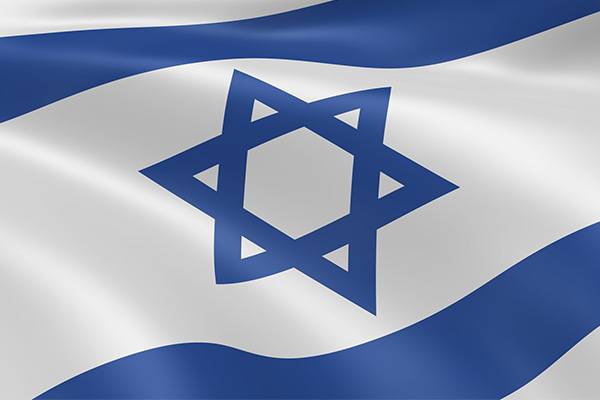
I don’t remember the exact moment I first learned about Israel. It was simply part of the air I breathed as a Jewish child. The blue Jewish National Fund box sat on our kitchen mantle, quietly collecting coins for trees that would be planted in a land I had never seen. My synagogue’s religious school spoke passionately of Zionism, though I couldn’t have defined the term back then. The maps of Israel that hung in my classroom felt different—ancient and new, mythical and real.
At home, Israel was presented in absolutes: she was always right, and her enemies were always wrong. That view offered comfort and clarity, especially for a child of post-Holocaust parents who believed Israel’s existence was the guarantor of Jewish survival. I didn’t question that narrative—until I did.
Everything changed in 1990, when I boarded a plane for my first year of Rabbinical School in Jerusalem. I didn’t know what to expect, but from the moment I landed, I felt something powerful. The air, the light, the rhythm of the language—it all felt strangely familiar. Within days, I knew: I was home.
That year shaped me. I walked everywhere—losing 35 pounds in the process—and along the way, I met Debbie, my future wife and life partner. I experienced the holiness of Jerusalem and the chaos of Israeli bureaucracy, the warmth of its people and the frustrations of daily life. I studied Torah in the land where it was first written and debated ethics in cafés filled with the descendants of survivors, dreamers, and builders.
My love for Israel grew, not as an idealized myth, but as a real relationship—complex, challenging, and enduring. I saw that loving Israel did not mean ignoring her flaws; it meant refusing to give up on her promise.
Over the years, I’ve returned many times—leading congregations, students, and families through the streets of Jerusalem and the hills of the Galilee. I’ve watched faces light up as they touched the stones of the Kotel or floated on the Dead Sea. I’ve also listened to Israelis and Palestinians alike wrestle with fear, hope, and exhaustion. The more I’ve seen, the more I’ve understood: Israel is not just a place. It’s a living question—a mirror of what it means to be Jewish in every generation.
Zionism for a New Generation
Zionism, at its core, is the belief that the Jewish people have the right to self-determination in our ancestral homeland. It is not a political party, nor is it synonymous with any one government. It is a moral and spiritual claim—that the Jewish people, after centuries of exile and persecution, deserve a home of our own and the freedom to shape our destiny.
But to be a Zionist in the 21st century is not only to defend Israel’s right to exist—it is to engage honestly with what that existence demands of us. It means asking: What kind of Jewish state are we called to build? What does it mean for a people chosen for moral purpose to wield power, to govern, to defend, and to choose?
In our grandparents’ generation, Zionism was a movement of rescue and return. In ours, it must become a movement of renewal and responsibility. Today’s Zionism must hold the tension between pride and protest, between love and accountability. It must affirm both the miracle of Jewish sovereignty and the moral imperative that sovereignty entails.
To love Israel today is to live with paradox. It is to rejoice in her technological brilliance, her democratic vitality, and her cultural creativity—and to mourn when she strays from her founding vision of justice and equality. It is to celebrate her courage while demanding her compassion. It is to believe, as Rabbi Jonathan Sacks taught, that Israel is the living expression of the Jewish people’s collective hope, and that our task is to ensure that hope remains holy.
Faith, Frustration, and Hope
There are moments when loving Israel is hard—when fear triumphs over vision, when policies divide rather than unite, when moral clarity feels obscured by conflict. But frustration does not weaken our bond; it refines it. Just as prophets once cried out to Israel from within their love, we too are called to speak hard truths out of devotion, not disdain.
To be a Zionist today is to carry both heartbreak and hope. It is to stand with Israel against those who seek to destroy her—and also to call her to be her best self. It is to remember that power, for the Jewish people, was never meant to be an end in itself, but a means to serve life.
The 12th-century poet Yehuda HaLevi wrote, “My heart is in the East, and I am at the edge of the West.” I know that feeling. My body lives in Dallas, but part of my soul still walks the streets of Jerusalem. In moments of fear and uncertainty, I turn toward her with prayer and pride—and with an unbroken faith that her story, and ours, is still being written.
Am Yisrael Chai – And So Does Hope
For me, loving Israel is not a political act; it is a sacred covenant. It is how I express my gratitude for the generations who dreamed her into being, and my responsibility to those who will inherit her future.
Israel matters because she reminds us who we are—a people of faith and resilience, of vision and repair. She matters because her existence proclaims that Jewish life will not vanish from history. And she matters because her flourishing, with all its struggles and imperfections, calls us to live more deeply into the values we profess to hold dear.
May we never take Israel’s existence for granted. May we never surrender the dream of a Jewish state that embodies both strength and righteousness. And may we, wherever we live, carry her in our hearts—not as a symbol of perfection, but as a promise of possibility.
Am Yisrael Chai – the Jewish people lives. And with us, so does hope.


3 Responses
Shavuah Tov!
As an American Jew, I have hope that both of my home countries aspire and achieve the pentultimate realization of their founders visions.
As a student of history and human, I realize that 100,000 years of human evolution is full of ups and downs, successes and disappointments.
My prayers are that G-ds plan (LOL – whatever that might be) is achieved in the USA, Israel and everywhere on Earth. I work towards that everyday – learning that I cannot expect of Israel more than what I expect of our American leaders.
Zionism to me is not a goal but a journey. Zionism to me is a philosophy rooted in peoplehood but not unique to Jews alone. Where the Jewish experience can provide insight for the rest of humanity is in realizing if the will is strong “it is not a dream.”
Rabbi, you have given me a new way of looking at Zionism, which tells me that I am a Zionist when I didn’t believe I was.
Rabbi Paley, you are always there to give us the words, compassion, honesty, heartfelt intelligence for all things important! I have never been to Israel but your words give me hope and desire to one day accomplish this! This is so beautifully written I think it should go in every newspaper and every school so that people can reflect on your thoughts and come to understand Israel as you do. You are always filled with surprise and enlightenment. Thank you for caring and sharing!